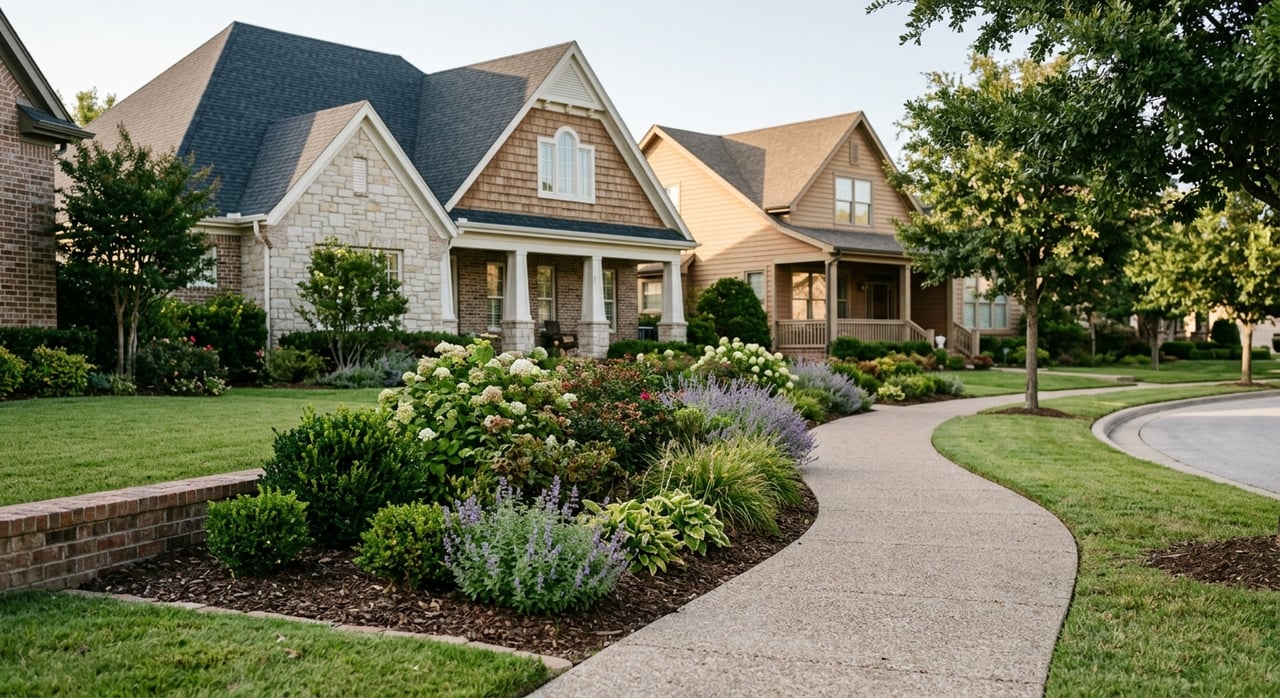
Thinking about a move to Franklin and wondering what a master-planned community actually means? You are not alone. For many relocation buyers, the appeal is easy to see: organized neighborhoods, shared amenities, trails, and a more connected day-to-day lifestyle. What is less obvious is how these communities are structured, who maintains what, and what the rules can mean for your budget and routines. This guide will walk you through how master-planned communities work in Franklin so you can compare your options with more confidence. Let’s dive in.
What Master-Planned Means in Franklin
In Franklin, master planning is about coordinated, long-range development rather than one subdivision being built in isolation from the next. The city’s planning framework supports communities that are intentionally designed, often with a mix of homes, open space, paths, and shared features that work together as a whole.
That can look different from one neighborhood to another. In some cases, a master-planned community is mostly residential and centered around resident amenities. In others, it may be mixed-use, with homes located near shops, offices, restaurants, or services.
Franklin also uses a Planned District zoning approach for developments that need a customized plan. Instead of forcing every project into a standard template, the city reviews these developments through its planning process based on the specific plan submitted.
Why Open Space Matters
One of the biggest features of master-planned living in Franklin is open space. In conservation-subdivision areas, the city may expect clustered lots and large, contiguous areas of preserved land. In some cases, at least 50% open space may be preserved for scenic views, trails, greenways, woodlands, and habitat.
For you as a buyer, that often means the neighborhood layout is doing more than fitting in as many homes as possible. It may be designed to preserve natural features while also creating a more connected feel through sidewalks, trails, and shared outdoor areas.
That said, not all open space works the same way. Some areas may be public in nature, while others are owned or maintained privately through an HOA or POA. That distinction matters when you are trying to understand access, upkeep, and monthly dues.
Greenways vs. Neighborhood Amenities
This is one of the most important distinctions to understand if you are relocating to Franklin. Public greenways and trails are not the same thing as neighborhood amenities, even if both add to the lifestyle appeal.
Franklin defines greenways as linear open space along natural corridors or rights-of-way, and those greenways must include multi-use paths. Neighborhood amenities, by contrast, are resident-oriented features such as pools, sports courts, sports fields, playgrounds, and dog parks.
Why does that matter? Because a trail you can walk every day may be part of the city’s broader public network, while the pool, clubhouse, or courts may be private and reserved for residents and their guests. When you tour homes, it helps to ask which features are public, which are private, and who is responsible for maintaining each one.
What Daily Life Can Feel Like
Franklin has invested heavily in walkability and outdoor access. The city’s more recent walkability materials highlight 21 parks, 1,025 acres, 417 miles of city-owned sidewalks, and 37 miles of multi-use trails. Recent pedestrian projects, including the Harlinsdale pedestrian bridge and the New Highway 96 West multi-use trail, show how seriously connectivity is being treated.
Inside master-planned neighborhoods, daily life can feel even more connected depending on the community. Some places are designed so you can walk from your home to everyday conveniences or resident amenities in just a few minutes.
For example, Berry Farms describes a 600-acre mixed-use master-planned community with homes near shops, restaurants, offices, parks, a pool, a pool house, and bocce courts. Westhaven highlights a Village Center, a large clubhouse, resort-style pools, trails, community parks, tennis and pickleball, and community events. Fieldstone Farms also emphasizes resident amenities, paved pathways, parks, and neighborhood social events.
The practical takeaway is simple: two master-planned communities can both sound appealing, but the lifestyle may be very different. One may feel more mixed-use and walk-to-convenience oriented, while another may feel more residential and amenity-focused.
How HOAs and POAs Fit In
Most master-planned communities involve some form of shared ownership or shared maintenance. In Franklin, open space may be owned and maintained by an HOA, a POA, private ownership with a conservation easement, public ownership, or in some situations a land trust or conservancy.
If open space is deeded to an HOA or POA, membership is mandatory. The restrictions run with the land, and assessments can become liens on the property if they are not paid. In a POA structure, the association may also be responsible for liability insurance and local taxes on the open space and facilities.
This helps explain why dues can vary so much from one neighborhood to another. A community with more amenities, more private common areas, and more long-term maintenance obligations will usually have a different cost structure than one with a simpler setup.
Why Monthly Dues Vary
If you are comparing communities from out of state, HOA dues can be one of the easiest numbers to misunderstand. A lower monthly fee is not always the better value, and a higher fee is not always a red flag. It depends on what the association is responsible for.
Dues may reflect:
- Maintenance of common open space
- Resident-only amenities
- Landscaping in shared areas
- Sidewalk or trail upkeep in private areas
- Insurance obligations
- Funding for reserves and future repairs
Tennessee also enacted a reserve-study requirement for certain unit owners’ associations in 2023. That is one reason it is smart to ask whether current dues cover only day-to-day operations or also include long-term reserve planning.
What Rules Buyers Should Expect
Master-planned communities often come with more structure. That is part of the tradeoff. In exchange for shared upkeep, organized design, and amenities, you can also expect rules about how certain exterior changes are handled.
In McKay’s Mill, for example, changes to exterior appearance require design review committee approval, and the HOA notes that roofs, trim or color changes, additions, fences, decks, pools, and landscaping may need approval. Fieldstone Farms similarly states that anything changing the exterior appearance of the property should be submitted for committee review, and owners are reminded to check for city and HOA approval where applicable.
For a relocation buyer, this is especially important if you already know you want to add a fence, change paint colors, build a deck, or install a pool. It is much better to understand the approval process before you buy than after you move in.
What Tennessee Requires at Closing
If you are buying in a planned community, document review should start early. Tennessee law requires sellers of residential property to disclose whether the home is in a planned unit development. Sellers must also make the development’s restrictive covenants, bylaws, and master deed available to the buyer upon request.
That matters even more when you are relocating from another state and may be comparing homes remotely. The documents can help you understand the rules, maintenance responsibilities, dues structure, and the broader expectations that come with ownership in that neighborhood.
Questions to Ask Before You Buy
When you are touring a master-planned community in Franklin, the best questions are usually practical. They help you understand not just how the neighborhood looks, but how it functions.
Ask questions like:
- What parts of the neighborhood are public and what parts are private?
- Which amenities are reserved for residents and guests?
- What do the dues currently cover?
- Are there reserve-funded projects or possible special assessments coming up?
- What exterior changes require approval?
- Who maintains the sidewalks, trails, landscaping, and common open space?
In many Franklin communities, the answer is not all city or all HOA. It is often a mix of both, depending on the specific feature.
The Tradeoff to Understand
Master-planned living in Franklin is often about balance. You may get more connectivity, more shared maintenance, and a stronger amenity package. You may also get more rules, more dues, and more approval steps than you would in a less structured neighborhood.
For many buyers, especially those relocating or considering new construction, that tradeoff can be well worth it. The key is understanding how the community is set up before you commit, so your expectations match the lifestyle and costs.
If you are comparing Franklin neighborhoods from afar, having a local guide who can help you look past the marketing language and into the actual structure of the community can make the process much easier. If you want help evaluating master-planned neighborhoods and finding the right fit for your move, connect with Jacqueline Brown.
FAQs
What does a master-planned community in Franklin usually include?
- In Franklin, a master-planned community often includes coordinated residential development, preserved open space, sidewalks or trails, and sometimes shared amenities or mixed-use elements like shops and services nearby.
What is the difference between Franklin greenways and neighborhood amenities?
- Franklin greenways are public-style linear open spaces with multi-use paths, while neighborhood amenities are typically resident-focused features like pools, courts, playgrounds, and dog parks.
Do Franklin master-planned communities always have HOA fees?
- Many do have HOA or POA fees because shared open space, amenities, and common areas often need private maintenance, insurance, and long-term funding.
What do HOA dues in Franklin master-planned communities usually cover?
- Dues can cover common-area maintenance, landscaping, resident amenities, insurance obligations, and in some cases reserve funding for future repairs or replacements.
Can you make exterior changes in a Franklin master-planned community without approval?
- Often, no. Many communities require design review for exterior changes such as fences, decks, roofs, color changes, landscaping updates, or additions.
What should relocation buyers review before buying in a Franklin planned community?
- You should review the restrictive covenants, bylaws, master deed if applicable, amenity access rules, maintenance responsibilities, and the current dues structure as early as possible.
How can you compare master-planned communities in Franklin more effectively?
- Focus on practical questions about public versus private spaces, amenity access, dues, maintenance responsibilities, reserve planning, and approval requirements so you can compare how each community actually functions.