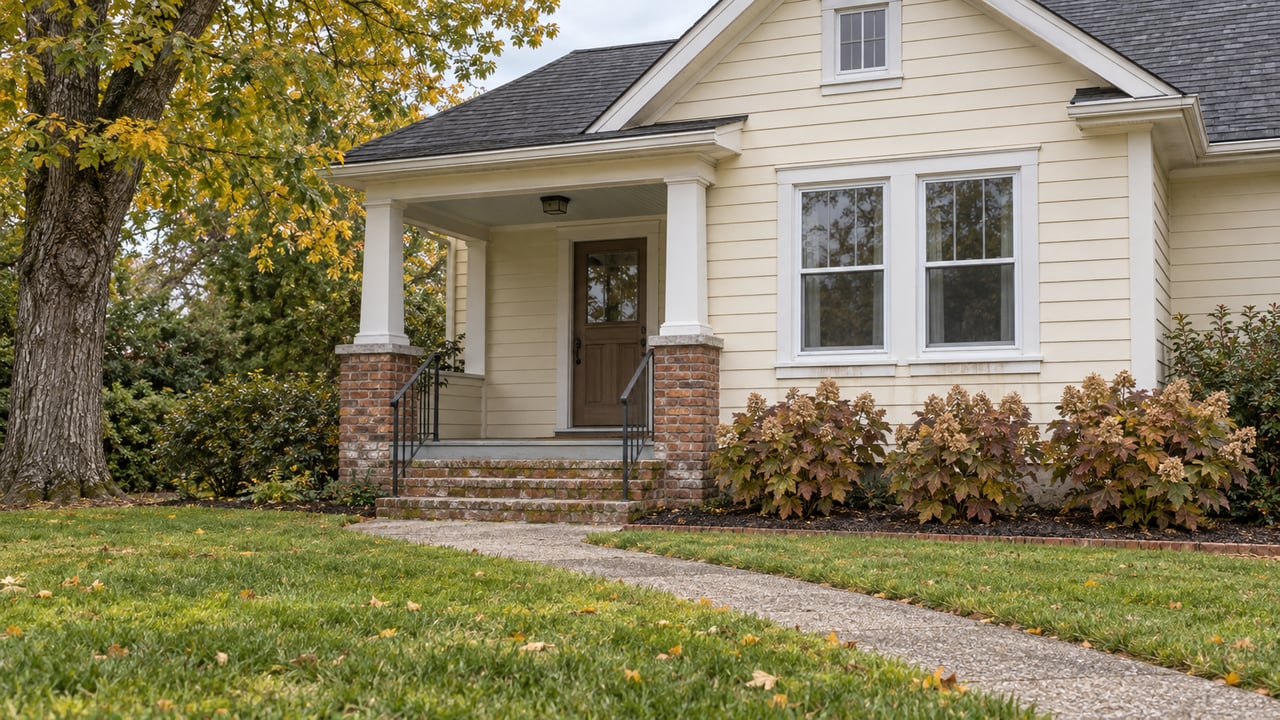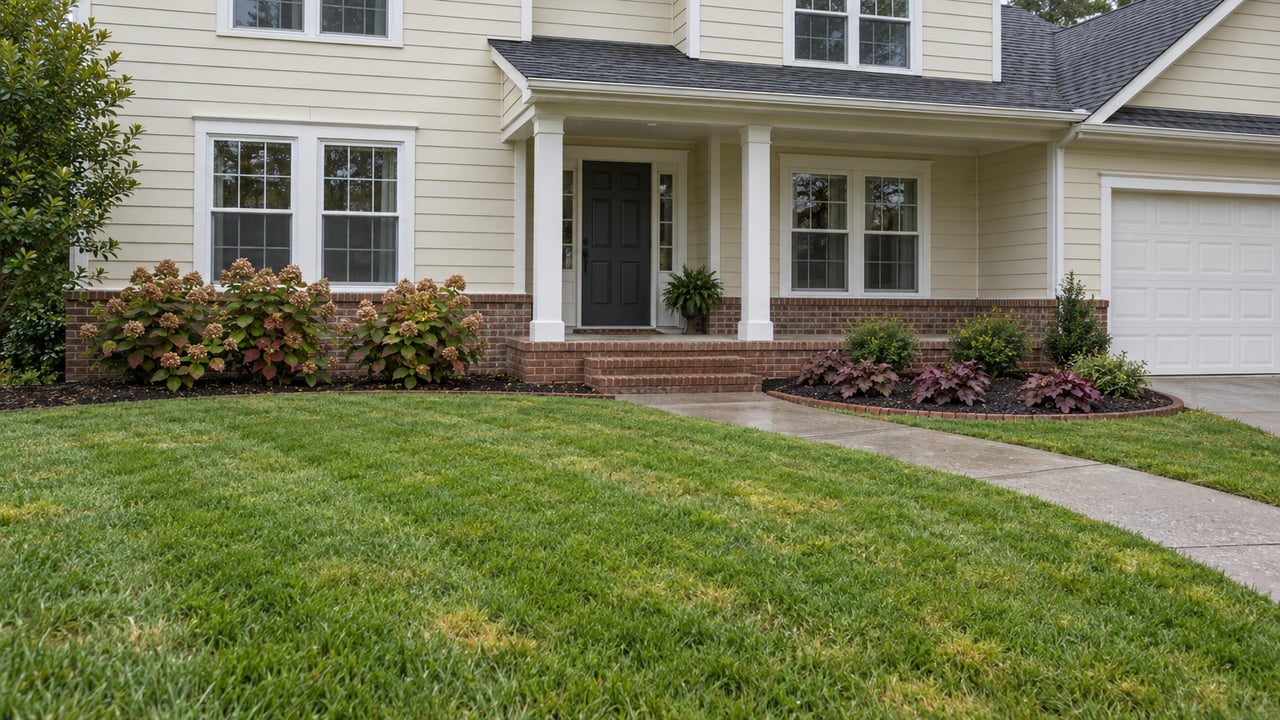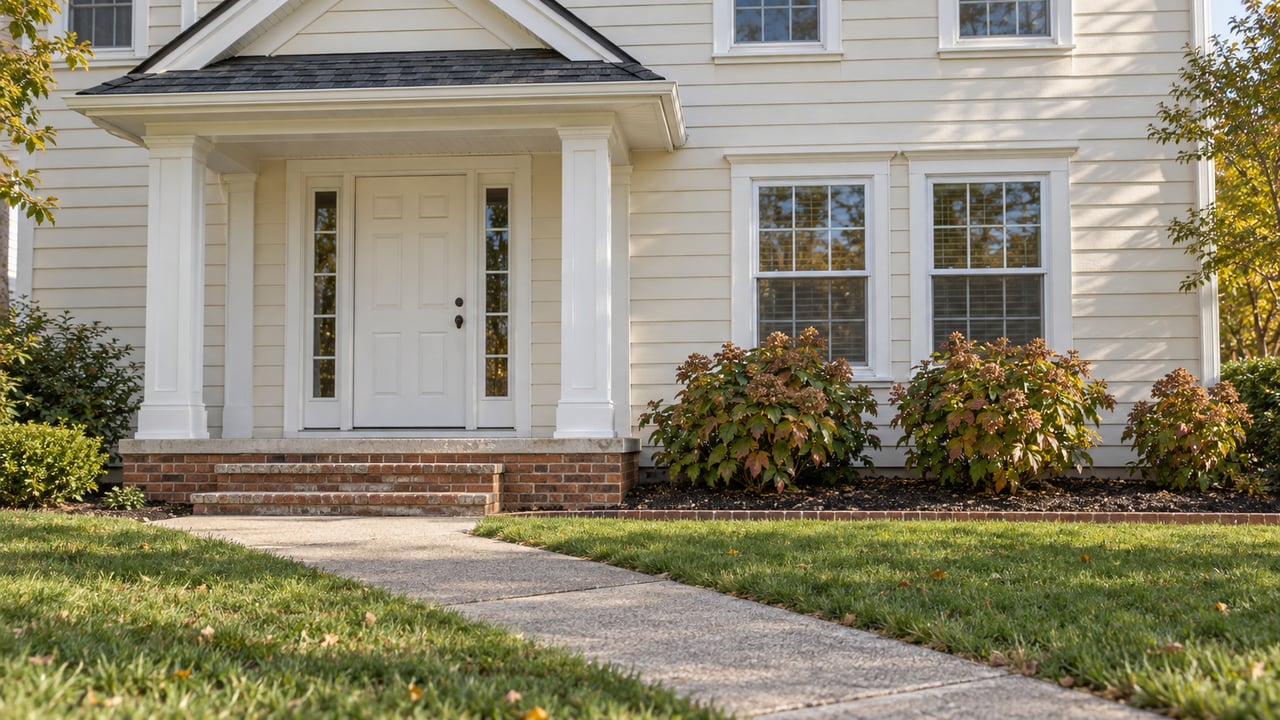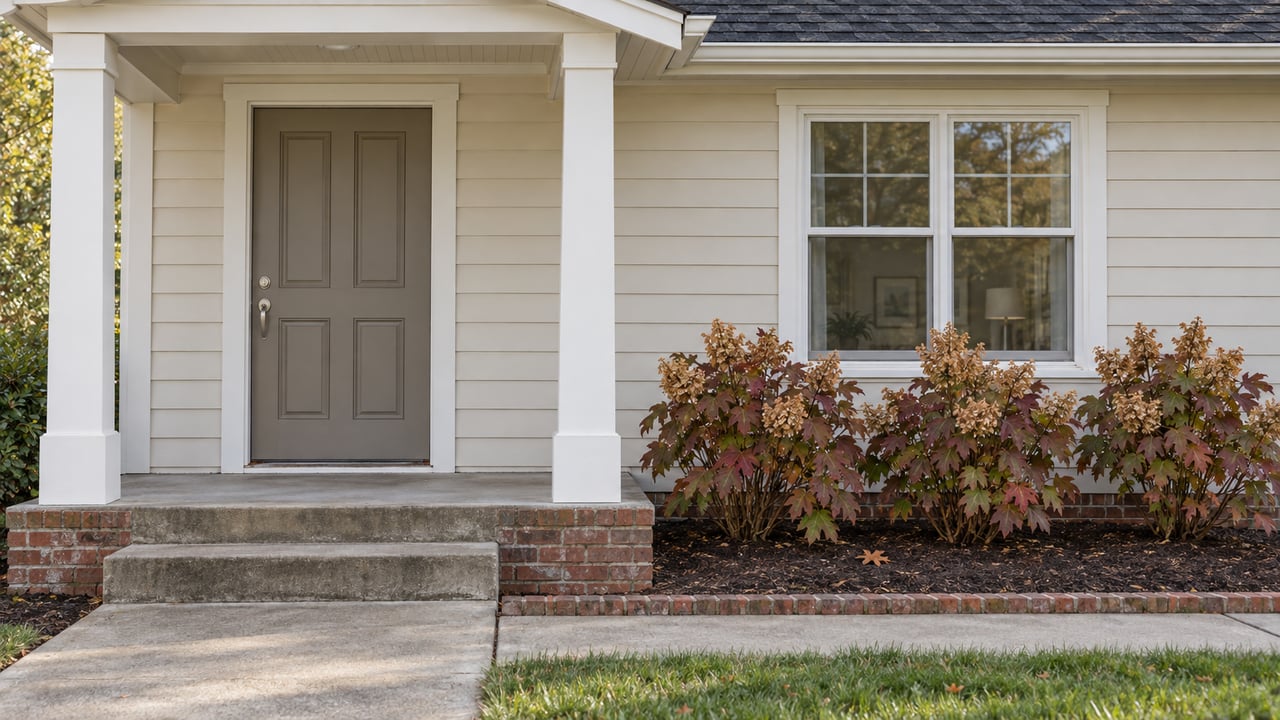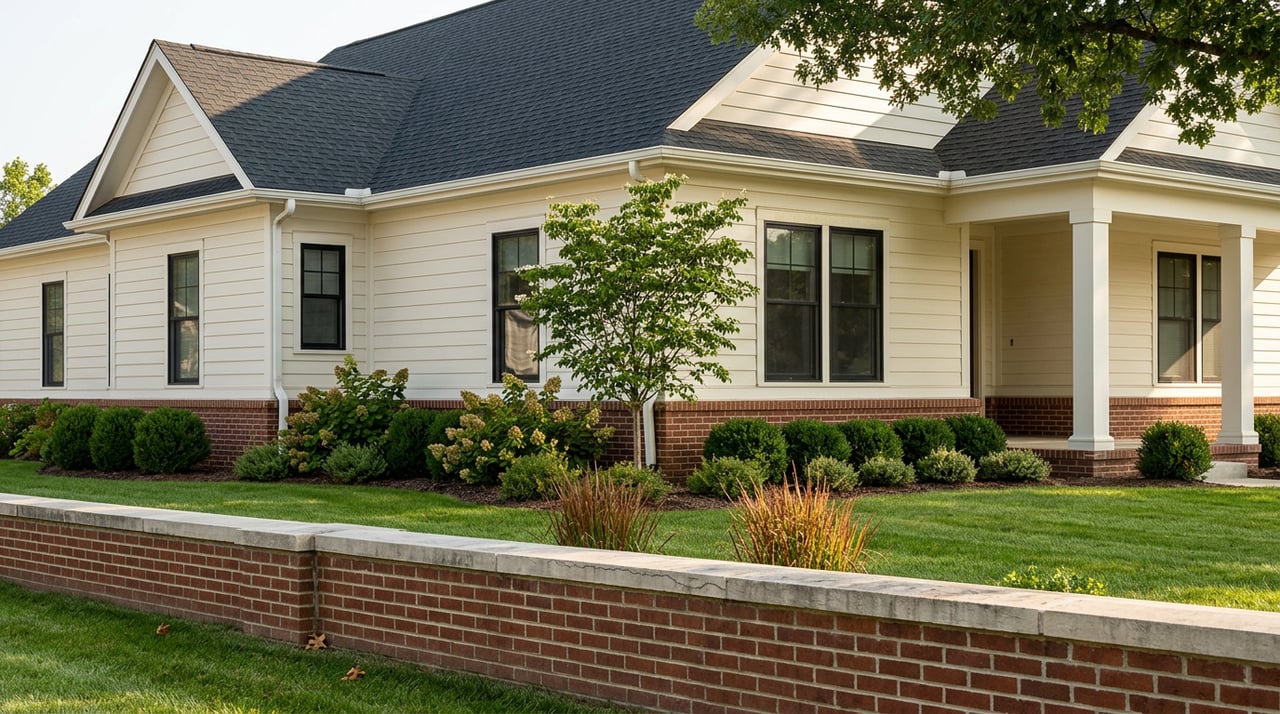
Picture two houses on the same Spring Hill cul-de-sac. Same builder. Same floor plan. Same brick, same roof pitch, same three-car garage. One is listed at $565,000. The other is listed at $495,000. Neither agent is wrong on price. The seventy-thousand-dollar gap has nothing to do with the homes and everything to do with a county line that runs through the neighborhood without a sign, a curb cut, or a mailbox to mark it.
That line is the single most consequential fact in a Spring Hill purchase. It is also the one most buyers only discover after they have already fallen for a house.
The tax stack, in plain numbers
Start with what is genuinely the same on both sides. Spring Hill is one city, and the city portion of the property tax is set by the Board of Mayor and Aldermen through a single ordinance each year. For FY 2025-2026, that rate is $0.739 per $100 of assessed value on both the Williamson and Maury sides, established by Ordinance 25-12. The city collects those dollars separately from the counties.
The counties are where the story splits.
| Component | Williamson side | Maury side |
|---|---|---|
| Spring Hill city rate (FY25-26) | $0.739 / $100 | $0.739 / $100 |
| County rate (2026) | Williamson County levy | ~$0.74 / $100, held flat June 2026 |
| Effective rate on typical Spring Hill home | ~0.34% | ~0.48% |
| School district | Williamson County Schools | Maury County Public Schools |
Read that effective-rate row twice. The Williamson side, which trades at a premium, carries the lower effective property tax. The Maury side, which is cheaper to buy, is more expensive per dollar of value to hold. Maury County commissioners voted in June 2026 to hold their rate steady, a decision covered by WSMV, which reported the county would keep the rate at about $0.74 per $100 of assessed value. Williamson has publicly posted its 2026 rate through the county trustee.
If taxes were driving the price gap, the arrow would point the other way. It does not. Which means the $40,000 to $80,000 delta is buying something else.
What the premium is actually buying
It is buying school-zone assignment, capitalized into the sale price at closing.
Williamson County Schools is ranked at the top of Tennessee by multiple methodologies, and Maury County Public Schools sit a tier below in those rankings. Two homes on the same street, one on each side of the line, can differ by $40,000 to $80,000 in market value with identical specs. Buyers with school-age children pay the premium because the zoning is bundled with the deed and travels with resale. Buyers without school-age children sometimes pay it anyway, because the next buyer in ten years will care.
That is a genuine economic mechanism, and it is worth naming clearly: you are not paying more for a better roof or a lower tax bill. You are paying a capitalized subscription to a school assignment that the parcel comes with.
Two practical consequences follow.
First, the premium is durable across market cycles. It is not a froth number that a soft market erases. Williamson-side homes still price above Maury-side comparables when the overall market cools, because the underlying zoning does not cool.
Second, the premium is a mispricing risk if you cannot verify the parcel. Which brings us to the friction that catches people off guard.
The verification step most buyers skip
The Williamson-Maury line does not follow streets, subdivision entrances, HOA boundaries, or ZIP codes. It cuts through neighborhoods. Canterbury illustrates this most clearly: it is a single master-planned community with a pool, trails, and a playground, and it spans both sides of the county line. Two neighbors on the same cul-de-sac can be in different counties, different school districts, and different tax jurisdictions.
The friction is that the sources most buyers consult are the sources most likely to be wrong. Builder sales reps, listing agents, and the MLS county field have all been documented to contain errors on Spring Hill parcels. ZIP codes do not help. Street addresses do not help. Neighborhood names do not help.
Here is the verification workflow that does:
- Pull the parcel ID or tax-assessor parcel number for the specific address.
- Look that parcel up directly in the Williamson County Assessor database or the Maury County Assessor's records.
- Confirm the county assignment on the assessor page, not on the listing.
- Cross-check the school zoning against the county's current zoning map, since Williamson has periodically rezoned attendance areas and boundaries shift.
- Do all of this before the offer is written, not after inspection.
This is not a paperwork ritual. It is the step that determines whether the price you offered matches the asset you receive. A $565,000 offer on a home the seller believed was Williamson-zoned, but which sits on the Maury side of the parcel line, is an offer $40,000 to $80,000 above the correct comp.
What the current market adds, and what it doesn't
Fresh Spring Hill data tells three different stories depending on where you look, and a mid-market buyer should hold all three at once.
Redfin reported the median sale price at $542,000 for the three months ending May 2026, up 5.3% year over year, with homes selling after roughly 65 days. Movoto's July 2026 snapshot put the median list price at $539,000 with a 55-day median time on market. Zillow's home value index tells a different story, showing the typical Spring Hill home at $495,048 and down 5.4% over the prior year. Realtracs data compiled by Impact Realty for the June 12 to July 12, 2026 window shows an average sale price of $439,518 and days on market up 21.4% year over year.
These sources do not agree on the direction of the market, which is itself the signal. What they do agree on is that Spring Hill is no longer the frenzy market of 2021 and 2022. Inspection contingencies are back. Builders are negotiating. Rate buydowns are showing up in incentive stacks. Well-priced homes still move.
None of that macro noise changes the county-line math. A softer market means Maury-side homes get cheaper and Williamson-side homes get cheaper, but the gap between them tends to hold. If you are trading a lower purchase price for a Maury parcel, you should be doing that on purpose, with the school-zoning trade-off priced in, not as a surprise after closing.
The open-zoning lottery is a workaround, not a fix
There is one wrinkle worth understanding. In January 2026, the Williamson County Board of Education approved open-zoned schools for the 2026-27 school year. Families complete an out-of-zone application online, with the window running from February 4 through April 15. If the number of applicants exceeds available seats, the district conducts a random lottery. Applicants must live inside Williamson County, and approved families provide their own transportation.
Read that residency requirement carefully. Open zoning lets a Williamson County resident apply to a different Williamson County school. It does not let a Maury-side Spring Hill homeowner opt into Williamson County Schools. A Maury parcel does not become Williamson-zoned through the lottery, no matter how close the house is to the line.
The lottery is a real tool for families who already live on the Williamson side and want a specific school. For buyers weighing which side of Spring Hill to purchase on, it changes nothing about the underlying pricing mechanism.
What this means at the offer table
If you are considering Canterbury, or any of the older neighborhoods where the line runs through the plat, treat county verification as a pre-offer step, not a due-diligence step. If you are looking at Tollgate Village or Bridgemore Village in Thompson's Station, both sit fully on the Williamson side, and the premium is already reflected in list prices. If you are prioritizing lot size and lower entry price and school zoning is not a decision factor for your household, the Maury side of Spring Hill is doing exactly what a healthy market should: offering a real discount for a real trade-off.
The mistake is paying the Williamson premium and receiving a Maury parcel. Or paying a Maury price expecting a Williamson comp on resale. Both happen. Both are preventable with one afternoon of parcel-level verification.
A short FAQ
Does the Spring Hill city tax rate ever differ between the two counties? No. The city rate is set by a single ordinance and applied on both sides. Ordinance 25-12 sets the FY 2025-2026 rate at $0.739 per $100 of assessed value on both the Williamson and Maury portions of the city.
If I buy on the Maury side, can I request a Williamson school through open zoning? No. Williamson County's open-zoning program requires the applicant to be a Williamson County resident. A Spring Hill address on the Maury side does not qualify.
Who actually collects my property tax after closing? Three separate bills. The City of Spring Hill collects its city portion directly. Your county, either Williamson or Maury, bills its county portion. You will receive tax notices from more than one entity, and payment channels differ.
Is the county line visible anywhere on the ground? Not usefully. It follows historical parcel boundaries, not roads or subdivision markers. The only reliable representation is the parcel-level view in the county assessor systems.
Buying in Spring Hill is one of the few markets in the Nashville metro where a single afternoon of verification can move an offer by tens of thousands of dollars. If you are relocating and cannot walk the parcel yourself, that verification is exactly the kind of on-the-ground representation Jacqueline Brown is built to provide, alongside builder oversight, inspection coordination, and weekly check-ins through closing. When you are ready to talk through a specific address or a specific side of the line, book a call and bring the parcel number.